


Spitsbergen (Svalbard) – the Arctic
The unique world of the Arctic: Spitsbergen, an archipelago in the Arctic Ocean, is part of the Svalbard archipelago, which belongs to Norway. Known for its rugged, unspoilt nature, Spitsbergen offers a unique blend of Arctic wildlife, breathtaking landscapes and fascinating history.
Geography and climate: Characterised by ice-covered mountains, deep fjords and extensive glaciers, Spitsbergen lies around 1,300 kilometres from the North Pole. The climate is Arctic, with long, cold winters and short, cool summers, making the archipelago a habitat for specialised flora and fauna.
Wildlife and ecosystems: Svalbard is famous for its rich wildlife, including polar bears, walruses, various species of whale and a wide variety of seabirds. These species have adapted to the harsh climate and are crucial to the region’s ecological balance.

Whaling, mining and research
History and human settlement: The history of Svalbard is characterised by whaling, mining and scientific research. Today, around 2,500 people live in the capital, Longyearbyen, the world’s northernmost settlement, which is a hub for research, education and tourism.
Research and education: Svalbard is a major centre for Arctic research. Scientists from all over the world study climate change, marine biology and geology here. The university settlement of Ny-Ålesund is one of the world’s leading stations for polar research.


Paradise in Peril
Tourism and sustainable development: Tourism in Svalbard has increased in recent decades, with visitors drawn to the unique landscape, wildlife and opportunities for outdoor activities such as hiking, skiing and dog sledding. Sustainability and environmental protection are of great importance in this context.
Threats and challenges: Despite its remoteness, Svalbard faces challenges such as climate change, which is leading to melting glaciers and changes in habitats. Preserving the unique natural environment and wildlife remains a key priority.
The weather in Spitsbergen in July

An Arctic summer
The mildest time of year: July is one of the best months to visit Svalbard. It is the Arctic summer, when temperatures are relatively mild and the midnight sun shines 24 hours a day. These unique conditions offer a great opportunity to experience the archipelago’s impressive nature and wildlife.
Temperatures and weather conditions: In July, average temperatures in Svalbard range between 5°C and 10°C. Although this is warm by Arctic standards, visitors should be prepared for cool and changeable weather conditions. Wind and fog are common, and the weather can change quickly.
Midnight sun and long days: One of the most fascinating phenomena in Spitsbergen in July is the midnight sun. The sun does not set for several weeks, meaning visitors experience daylight around the clock. This allows for longer excursions and the chance to enjoy the unique landscape at any time of the day or night.
Clothing and equipment: Appropriate clothing is essential for a visit to Spitsbergen in July. Layered clothing, waterproof jackets and trousers, as well as warm underwear and good walking boots, are recommended to cope with the changing weather conditions.
Products to suit your next trip


![VAKA make-up case - purple [18]](https://cdn.koffer24.de/thumbnail/3c/82/3a/1759389949/1056299_1_1920x1920.webp?ts=1759389953 "VAKA make-up case - purple [18]")

![BOLONIA Wheeled Duffle M - Navy [20]](https://cdn.koffer24.de/thumbnail/97/20/e8/1777015720/1058343_1_1900x1900.webp?ts=1777015720 "BOLONIA Wheeled Duffle M - Navy [20]")
![BOLONIA Wheeled Duffle M - Orange [87]](https://cdn.koffer24.de/thumbnail/4c/f0/72/1777015734/1058344_1_1900x1900.webp?ts=1777015735 "BOLONIA Wheeled Duffle M - Orange [87]")


![SK-II Trolley L (78 cm), expandable - Navy [20]](https://cdn.koffer24.de/thumbnail/df/bf/5f/1790794426/1062482_1_1900x1900.webp?ts=1790794427 "SK-II Trolley L (78 cm), expandable - Navy [20]")
![SK-II Trolley L (78 cm), expandable - Green [80]](https://cdn.koffer24.de/thumbnail/e1/99/67/1790794526/1062486_1_1900x1900.webp?ts=1790794527 "SK-II Trolley L (78 cm), expandable - Green [80]")


Top 10 sights on Spitsbergen:
- Svalbard Museum: The Svalbard Museum is a museum in Longyearbyen on Spitsbergen and showcases the history of the archipelago and its inhabitants
- Pyramiden: Pyramiden is an abandoned town on Spitsbergen and was formerly a Soviet mining settlement
- Svalbard Brewery: The Svalbard Brewery is a brewery in Longyearbyen on Spitsbergen and offers guided tours and tastings
- Gruve 3: Gruve 3 is a disused coal mine on Spitsbergen and offers guided tours
- North Pole Expedition Museum: The North Pole Expedition Museum is a museum in Longyearbyen on Spitsbergen and showcases the history of the North Pole expeditions
- Svalbard Church: Svalbard Church is a church in Longyearbyen on Spitsbergen and was built in 1958
- Magdalena Bay: Magdalena Bay is a bay on Spitsbergen offering breathtaking views of the sea and the surrounding mountains
- Magdalenefjord, Svalbard: Magdalenefjord is a fjord on Spitsbergen
- Isfjord Radio Adventure Hotel: The Isfjord Radio Adventure Hotel is a hotel in Kapp Linné on Spitsbergen
- Mine 7: Mine 7 is a disused coal mine on Spitsbergen and offers guided tours
1. Svalbard Museum
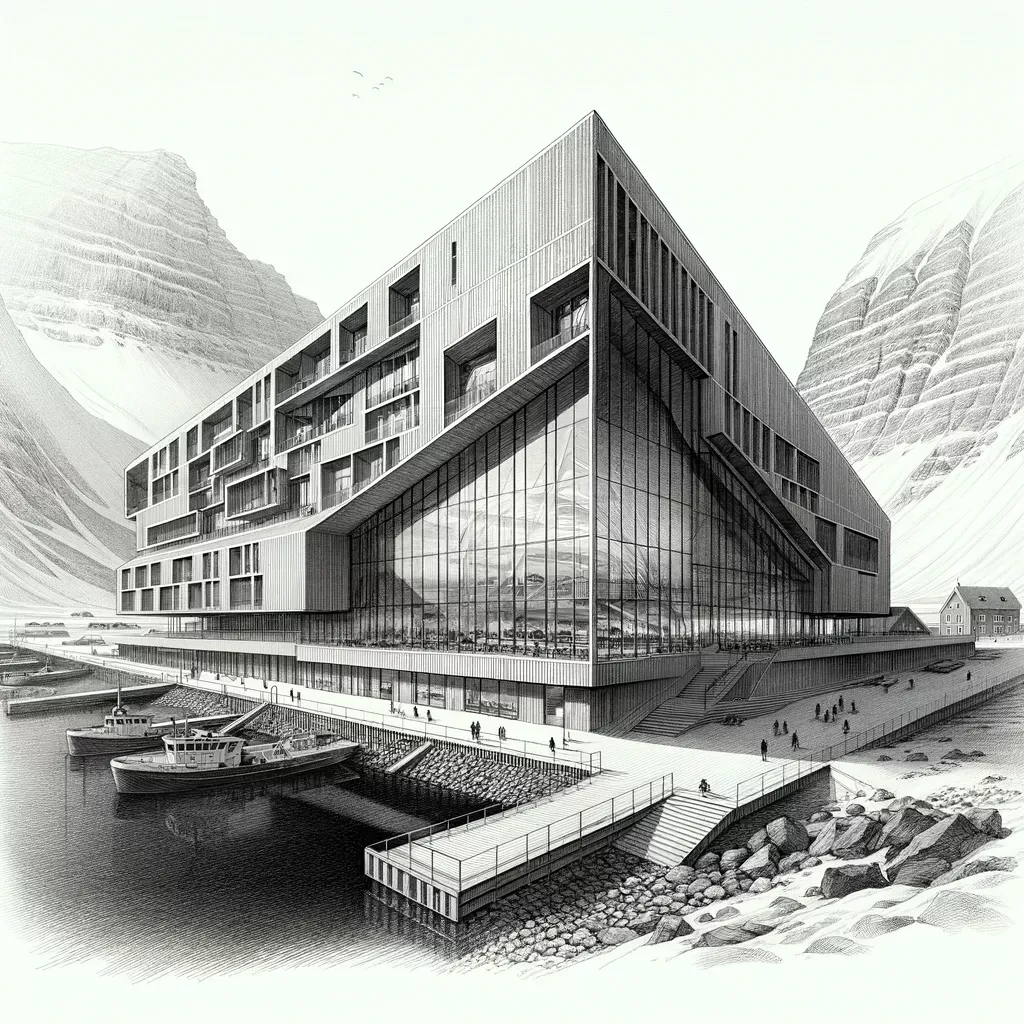
Insights into Arctic history and culture: The Svalbard Museum in Longyearbyen is a key cultural highlight on Spitsbergen. It offers a comprehensive insight into the nature, history and culture of the Svalbard archipelago. The museum showcases the unique Arctic wildlife, geology and the fascinating history of human settlement in this harsh environment.
Diverse and interactive exhibitions: The museum’s exhibitions are diverse and interactive. They cover topics such as the history of the island’s discovery, whaling, the mining industry, and the flora and fauna of the Arctic. Visitors can view authentic artefacts, historical photographs and life-size models that paint a vivid picture of Svalbard’s complex past and present.
Education and research: The Svalbard Museum is also a key centre for education and research. It provides scientific information on the impacts of climate change in the Arctic and promotes environmental awareness. The museum works closely with researchers and educational institutions to present up-to-date and relevant information.
2. Pyramids

A piece of history in the Arctic: Pyramiden, named after the nearby pyramid-shaped mountain, is a fascinating abandoned settlement on Spitsbergen. Originally a Soviet mining town, founded in the 1930s, it was abandoned in the late 1990s and now stands as an impressive ghost town.
Architecture and Soviet heritage: The architecture of Pyramiden is unique and reflects the typical Soviet architectural style of the time. Despite being abandoned, many buildings, including apartment blocks, a school, a cultural centre and even the northernmost monument to Lenin, are well preserved. They offer a glimpse into life during the Soviet era.
Tourist attraction and time capsule: Pyramiden has become a popular tourist attraction, offering visitors the chance to experience an almost untouched time capsule. Guided tours of the town are available and provide insights into the history and daily life of its former inhabitants.
Nature and wildlife: Surrounded by the breathtaking Arctic landscape, the area around Pyramiden offers rich wildlife and impressive nature experiences. Visitors can enjoy the unspoilt nature and tranquillity of the Arctic in this remote region.
3. Svalbard Brewery

Unique brewing craftsmanship in an extreme location: the Svalbard Brewery in Longyearbyen, Spitsbergen, holds the title of the world’s northernmost brewery. Founded in 2011 following the lifting of a 90-year-old ban on alcohol, the brewery has become a popular destination for beer lovers and adventurers from all over the world.
Innovative brewing under extreme conditions: What makes the Svalbard Brewery special is not only its location, but also its use of pure Arctic water from Spitsbergen’s glaciers for brewing. This gives the beer a unique freshness and purity. The brewery combines traditional brewing techniques with innovative approaches to create a variety of beer styles.
Guided tours and tastings: Visitors can take part in guided tours of the brewery to learn more about the brewing process and the challenges of brewing beer in the Arctic. The highlight of every tour is a tasting session where visitors can sample different types of beer.
4. Gruve 3

Insights into Svalbard’s mining history: Gruve 3, located near Longyearbyen on Svalbard, is a former coal mine and today stands as an important testament to the archipelago’s mining history. The mine opened in 1971 and closed in 1996, and now serves as a museum and educational centre.
Guided tours and exhibitions: Visitors can explore Gruve 3 on guided tours and gain an authentic insight into the working conditions and challenges of coal mining in the Arctic. The tour takes visitors through the original mining facilities, showcasing both the historical equipment and the evolution of mining techniques.
Significance for Longyearbyen and Svalbard: Coal mining played a crucial role in the history and development of Longyearbyen and Svalbard. Gruve 3 stands as a symbol of this industrial era and tells the stories of the people who worked under extreme conditions in the Arctic.
5. North Pole Expedition Museum

A celebration of polar exploration history: The North Pole Expedition Museum is located in Longyearbyen, Spitsbergen. It is dedicated to Arctic exploration and the courageous expeditions that set out for the North Pole. The museum presents a fascinating collection of historical artefacts, photographs and documents.
In-depth insights into famous expeditions: The museum showcases various famous polar expeditions, including those led by Fridtjof Nansen, Roald Amundsen and Umberto Nobile. It highlights both the scientific achievements and the personal challenges the explorers faced in the inhospitable Arctic environment.
Interactive and educational exhibitions: The exhibitions are designed to be interactive and offer visitors not only historical insights but also educational opportunities regarding the geography, flora and fauna of the polar regions. Particular attention is paid to the significance of the Arctic in the context of global climate change.
Honouring polar explorers: The museum honours the determination and courage of polar explorers and tells their stories in a way that appeals to and inspires visitors of all ages.
6. Svalbard Church

A unique church in the Arctic: Svalbard Church, located in Longyearbyen on Spitsbergen, is the world’s northernmost church. Built in 1958, it serves as an important religious and cultural centre for the small but diverse community on the islands.
Architecture and design: The church captivates with its simple yet striking wooden architecture, which blends harmoniously into the Arctic landscape. Its design reflects traditional Norwegian church architecture, adapted to the extreme climatic conditions of the Arctic.
A meeting place for the community: Svalbard Kirke serves not only as a place of worship but also as a social hub for the residents and visitors of Longyearbyen. It hosts various social activities, concerts and events and stands as a symbol of the strong community in this remote region.
An ecumenical and cosmopolitan approach: Despite being part of the Church of Norway, Svalbard Kirke has an ecumenical and cosmopolitan approach. It is open to people of all faiths and reflects the international character of Longyearbyen.
7. Magdalena Bay

Spectacular scenery and abundant wildlife: Magdalena Bay, situated on the north-west coast of Spitsbergen, is renowned for its breathtaking scenery and abundant wildlife. The bay offers spectacular views of glaciers, steep mountains and the Arctic Ocean. It is a popular destination for nature lovers and adventurers.
A hotspot for polar research and history: The bay has a rich history of polar research and whaling. Historical remnants of these times, such as old whaling stations and graves, are still visible in the area and bear witness to the region’s harsh past.
A paradise for birdwatchers and wildlife enthusiasts: Magdalena Bay is an ideal spot for birdwatching, as many seabirds nest here. Other Arctic animals, such as walruses, seals and, with a bit of luck, polar bears, can also be spotted here.
A popular destination for expedition cruises: The bay is a frequent stop for expedition cruises to the Arctic. Here, visitors have the opportunity to experience the unique Arctic wilderness up close and be part of an unforgettable expedition to one of the most remote regions in the world.
8. Magdalenen Fjord, Svalbard

Majestic landscapes in the heart of Svalbard: Magdalenenfjord, one of Spitsbergen’s most famous fjords, lies in the north-west of the archipelago. It is renowned for its striking Arctic landscape, characterised by towering mountains, deep blue waters and impressive glaciers.
A setting of history and natural wonders: The fjord is also a historic site, known for its remains from the whaling era of the 17th and 18th centuries. The beaches along the fjord are home to several old graves and ruins of whaling stations, offering visitors an insight into early human activity in the region.
Rich wildlife and unique ecosystems: Magdalenenfjord is a paradise for wildlife watching, particularly for seabirds, walruses and, occasionally, polar bears. The fjord’s clear waters are teeming with marine life, making it an ideal spot for nature watching.
Popular destination for expedition cruises: Much like Magdalena Bay, the Magdalenenfjord is also a popular stop for expedition cruises in the Arctic. Its unspoilt nature and spectacular beauty make it one of the highlights of any trip to Svalbard.
9. Isfjord Radio Adventure Hotel

Luxury in the wilderness: The Isfjord Radio Adventure Hotel, situated on the remote west coast of Spitsbergen, offers a unique combination of luxury and adventurous wilderness. Originally a radio and weather station, the building has been converted into a boutique hotel offering an exclusive and intimate Arctic experience.
Accessibility and surroundings: The hotel is only accessible by boat or snowmobile, which is part of the adventure. It is set amidst breathtaking Arctic scenery with panoramic views of the Isfjord, surrounded by rugged wilderness and impressive wildlife.
Comfort and sustainable hospitality: Despite its remote location, the Isfjord Radio Adventure Hotel offers comfortable and stylishly furnished rooms. The hospitality is warm and welcoming, with a focus on sustainable practices and respect for the sensitive Arctic environment.
Outdoor activities and exploration: Guests can enjoy a variety of outdoor activities, including hiking, birdwatching, kayaking and, in winter, snowmobile tours. The hotel also organises guided tours to explore the wild beauty of Spitsbergen.
10. Mine 7

One of the last active coal mines: Mine 7, located near the capital Longyearbyen on Spitsbergen, is one of the last remaining active coal mines in the region. It plays a vital role in the local economy and energy supply, as a large proportion of the coal is used to generate power in Longyearbyen.
Mining under extreme conditions: The mine offers a rare insight into mining under the extreme climatic conditions of the Arctic. The challenges and techniques of coal mining in one of the world’s northernmost mining sites are of particular interest to visitors.
Guided tours and educational opportunities: Guided tours are available for visitors, providing in-depth information about the mining process, the history of mining in Svalbard and the mine’s significance for the community. These tours are an excellent opportunity to learn more about the industrial and economic side of Longyearbyen.
Sustainability and future prospects: Mine 7 also features in discussions about sustainability and the future of fossil fuels. It provides an interesting example of how traditional industries operate in remote and sensitive ecosystems such as the Arctic.
Products to suit your next trip


You might also be interested in these topics:
- Short on space in the car? - Car cases for the leading car brands
- Sustainable rucksacks
- Discover Samsonite’s suitcases
- Sustainability labels and what they mean
- Suitcases and rucksacks made from ocean plastic
- Visit us on Instagram
- Premium ergonomic school bags from Belmil
- A companion throughout your school years
- Cabin luggage from Travelite
- Hard-shell suitcases from Travelite
- Discover hard-shell luggage – suitcases from Stratic
- The Stratic Straw Collection